In the ever-evolving world of enterprise resource planning (ERP), modern organizations are continuously seeking innovative solutions to bolster their supply chain management. Today's businesses face multifaceted challenges, including increased global competition, a surge in customer expectations, and disruptions caused by geopolitical events. In response, ERP providers are revolutionizing their platforms to meet these demands.
One of the most noteworthy trends is the integration of artificial intelligence (AI) and machine learning (ML) within ERP systems. These technologies provide organizations with predictive analytics capabilities, allowing businesses to anticipate demand fluctuations and adjust their supply chain strategies accordingly. For instance, an ERP system leveraging AI can analyze historical data to accurately forecast stock requirements, thus reducing the instances of stockouts or overstocking.
In my previous work with top accounting firms, we assisted numerous organizations in implementing AI-driven ERPs, leading to a significant uptick in supply chain efficiency. Companies were often amazed by how streamlined their operations became, as AI could quickly identify patterns and anomalies that human operators might miss.
Another emerging trend is the increased focus on sustainability within ERP platforms. With a growing emphasis on ethical business practices, ERP systems now often include features that track the carbon footprint of supply chain activities. This enables companies to reduce their environmental impact while maintaining transparency with eco-conscious consumers.
Furthermore, ERP solutions are increasingly incorporating Internet of Things (IoT) technology, which offers real-time data collection and analysis from numerous touchpoints along the supply chain. This capability allows businesses to respond rapidly to changes and maintain uninterrupted operations, enhancing supply chain resilience.
An example of successful ERP integration comes from a manufacturing giant that deployed an IoT-enabled ERP system. This integration enabled real-time monitoring of machinery and logistics, resulting in a 20% reduction in downtime and a significant increase in overall productivity.
Such advancements underscore the ERP industry's commitment to providing comprehensive and adaptable solutions that cater to diverse business needs. As organizations strive to streamline their supply chain processes, embracing these digital innovations within ERP systems will be crucial to staying ahead in a competitive marketplace.
Innovative ERP Solutions Rethink Supply Chain Management Featured
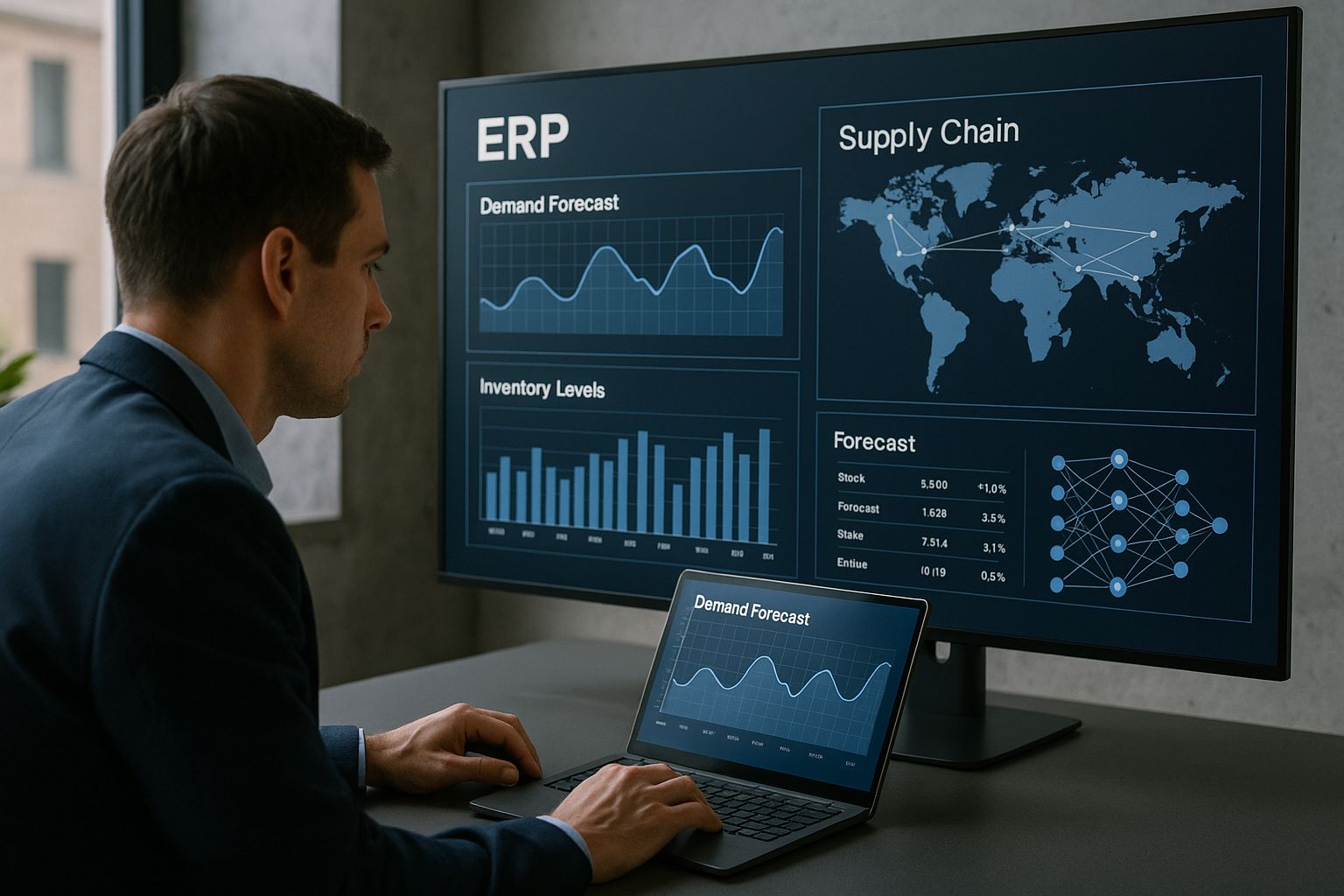 Discover the latest trends in innovative ERP solutions that are reshaping supply chain management with AI, ML, and IoT integration.

Latest from ERP Global Insights
- Adapting ERP Systems: The Rising Trend of Enhanced User Experience
- Leveraging ERP in Healthcare: The Path to Operational Excellence
- Navigating Supply Chain Challenges with ERP Solutions
- Navigating ERP Implementation Challenges in Today's Business Landscape
- The Rise of Cloud ERP Solutions in Today's Business Environment